


The Ministry of Ungentlemanly Warfare (2024)

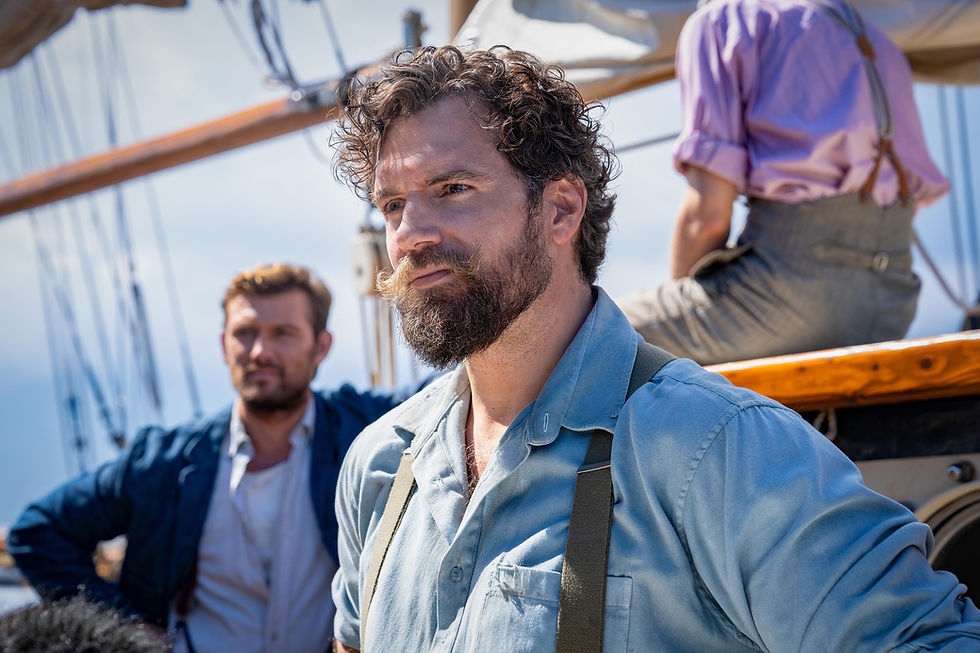
With The Ministry of Ungentlemanly Warfare, Guy Ritchie delivers a film that feels entirely in keeping with his cinematic identity—swaggering dialogue, eccentric characters, stylish violence, and a playful irreverence toward authority. Yet this time, Ritchie applies those familiar trademarks to the Second World War, crafting a wartime adventure inspired by the real-life exploits of Britain’s covert Special Operations Executive and Operation Postmaster.
The result is a film that sits somewhere between The Dirty Dozen, Where Eagles Dare, and Inglourious Basterds—a wildly entertaining, heavily fictionalised wartime romp that prioritises style, camaraderie, and explosive action over historical precision.
It may not be subtle, and it may not satisfy purists looking for rigorous historical drama, but as a crowd-pleasing action adventure, The Ministry of Ungentlemanly Warfare is enormously enjoyable.
Plot Overview
Set in 1942 during the darkest days of the Second World War, the film follows a ragtag group of unconventional soldiers and operatives assembled under the authority of Winston Churchill and British intelligence. Their mission: disrupt Nazi U-boat operations by targeting enemy supply ships stationed near Fernando Po in West Africa.

The team is led by Gus March-Phillipps (Henry Cavill), a fearless and unconventional operative whose methods are considered far too reckless for traditional military command. Alongside him are an eclectic group of specialists, including the towering Danish fighter Anders Lassen (Alan Ritchson), expert navigator Freddy Alvarez (Henry Golding), and spy Marjorie Stewart (Eiza González), who infiltrates Nazi circles while seeking revenge against the regime.
The mission itself is officially unauthorised—an operation designed to give Britain plausible deniability should things go catastrophically wrong. Naturally, things become increasingly chaotic, violent, and outrageous as the team pushes deeper into enemy territory.
Guy Ritchie’s Direction: Stylish Chaos with Confidence
Guy Ritchie has spent much of his career refining a distinctive cinematic voice, and The Ministry of Ungentlemanly Warfare feels like the culmination of many of his favourite motifs.
The film moves with relentless energy. Ritchie’s trademark rapid-fire editing, playful use of slow motion, stylised violence, and sharply comic dialogue are all present, but here they are placed within the framework of a classic men-on-a-mission war film.
What makes the film work is its refusal to take itself too seriously. From the opening sequence onward, Ritchie establishes a tone that is knowingly exaggerated. These soldiers are not portrayed as gritty, traumatised warriors in the mould of Saving Private Ryan or Das Boot. Instead, they are larger-than-life adventurers—almost comic-book heroes—cutting through Nazi forces with confidence, humour, and outrageous bravado.
The film’s action scenes are particularly effective. Ritchie stages firefights and ambushes with clarity and rhythm, allowing each member of the ensemble to display their unique combat style. The violence is stylised rather than harrowing, often played with a mischievous sense of fun.
Some viewers may find the film too lightweight given its wartime setting, but Ritchie clearly intends the film as pulp adventure rather than sombre realism.
Henry Cavill: A Charismatic Leading Turn
One of the film’s greatest strengths is the performance of Henry Cavill as Gus March-Phillipps. Cavill appears liberated here, shedding the stiffness that occasionally affected some of his previous heroic roles. Sporting a wild beard, curled hair, and an enormous moustache, he fully embraces the character’s roguish charm.

Rather than portraying a polished super-spy, Cavill plays Gus as an unruly, whisky-drinking adventurer whose confidence borders on recklessness. He exudes old-fashioned movie-star charisma throughout, anchoring the film with ease. Critics and audiences alike singled out Cavill’s relaxed and playful performance as one of the film’s highlights.
Equally memorable is Alan Ritchson as Anders Lassen, whose immense physicality and deadpan humour make him a scene-stealer. Ritchson turns the character into an almost mythic figure—a smiling Viking-like warrior who dispatches enemies with bows, knives, and brute strength.
Eiza González brings glamour and intelligence to Marjorie Stewart, giving the film an element of classic wartime espionage. Meanwhile, Henry Golding provides understated coolness as Freddy Alvarez, and Cary Elwes and Rory Kinnear add gravitas and dry wit within the intelligence command structure.
Tone and Style
Perhaps the most striking aspect of The Ministry of Ungentlemanly Warfare is its tone. This is not a film interested in the psychological horrors of war. Instead, it evokes the spirit of classic wartime adventure films while filtering them through Ritchie’s contemporary sensibilities.
The dialogue is knowingly cheeky, the heroes impossibly cool, and the Nazis depicted as theatrical villains designed to be dispatched in increasingly inventive ways. Critics frequently compared the film to Inglourious Basterds because of its gleeful anti-Nazi violence and stylised approach to history.
The film also leans heavily into masculine camaraderie. Much of its appeal lies in watching this eccentric team operate with complete confidence under impossible circumstances. There is a distinctly British flavour to the humour as well—dry understatement mixed with absurd bravado.
At times, however, the film’s breezy tone undermines dramatic tension. Because the heroes appear almost invincible, the stakes occasionally feel muted. Several critics noted that despite the scale of the mission, there is little genuine sense of danger.
Historical Accuracy and Fictionalisation
The film is “inspired by” true events rather than faithfully recreating them. Operation Postmaster was indeed a real British covert operation carried out in 1942 by the Special Operations Executive. However, the real mission was far less explosive and violent than the film depicts.
Ritchie takes considerable liberties with historical detail, transforming covert operatives into near-superhuman action heroes. The real operation reportedly involved stealth and minimal bloodshed, whereas the film delivers machine-gun battles, knife fights, and spectacular destruction.
Yet this fictionalisation is largely beside the point. Ritchie is not making a documentary; he is crafting a cinematic fantasy inspired by wartime folklore and pulp adventure storytelling. The film even cheekily connects the events to the inspiration behind James Bond through the inclusion of a young Ian Fleming.
Visuals, Music, and Production Design
Visually, the film is handsome and energetic. Cinematographer Ed Wild captures both the tropical atmosphere of West Africa and the smoky interiors of wartime Britain with rich textures and warm colours. The production design successfully evokes the era without becoming overly grim or austere.
Christopher Benstead’s score complements the film’s adventurous tone, blending military rhythms with modern cinematic momentum. The soundtrack supports the film’s playful swagger without overpowering it.
Ritchie’s pacing is brisk throughout the film’s 122-minute runtime, though the middle section occasionally drifts as the various subplots and preparations unfold. Once the final assault begins, however, the film regains its momentum and delivers a thoroughly entertaining climax.
Reception and Legacy
Critical response to the film was mixed-to-positive. Many praised its entertaining cast, energetic direction, and sense of fun, while others criticised its lack of emotional depth and historical seriousness.
Audiences generally responded more warmly, particularly fans of Ritchie’s style and viewers looking for unapologetically entertaining action cinema. The film performed modestly at the box office despite strong audience scores.
Over time, it is likely to develop a cult following, particularly among enthusiasts of wartime adventure films and Ritchie’s distinctive brand of stylish genre filmmaking.
Conclusion
The Ministry of Ungentlemanly Warfare is not a sober historical drama, nor does it pretend to be. Instead, it is a swaggering, wildly entertaining wartime caper that embraces style, humour, and cinematic excess with infectious confidence.
Guy Ritchie directs with his usual flair, while Henry Cavill delivers one of the most charismatic performances of his career. Supported by a strong ensemble cast, sharp humour, and exhilarating action, the film succeeds precisely because it understands its purpose: to entertain.
Though lacking the emotional depth of the greatest war films, it compensates with sheer personality and momentum. It is the kind of old-fashioned adventure picture that revels in its own absurdity—and audiences willing to embrace that spirit are likely to have a tremendous time.


