


Sir Kenneth Branagh

Updated: Dec 16, 2025
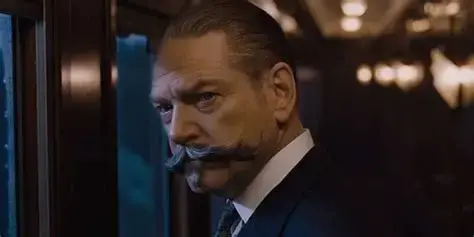
Sir Kenneth Branagh stands as one of the most dynamic and accomplished figures in modern British cinema and theatre. With a career spanning over four decades, Branagh has distinguished himself as an actor, director, producer, and writer with an extraordinary range—from Shakespearean drama to blockbuster thrillers. His dedication to classical material, passion for storytelling, and commanding screen presence have earned him acclaim on both sides of the Atlantic.
Early Life and Stage Beginnings
Born on December 10, 1960, in Belfast, Northern Ireland, Kenneth Charles Branagh moved with his family to Reading, England, at the age of nine due to the political unrest in Northern Ireland. He developed an early interest in drama and went on to study at the prestigious Royal Academy of Dramatic Art (RADA), where he quickly gained a reputation as a prodigious talent.
After graduating, Branagh joined the Royal Shakespeare Company and earned critical praise for his stage performances, most notably as Hamlet, Henry V, and Romeo. In 1987, he co-founded the Renaissance Theatre Company, aiming to make Shakespeare more accessible to modern audiences—a goal that would define much of his early career.
Breakthrough: Henry V (1989)
Branagh's directorial debut came with Henry V (1989), a gritty, emotionally charged adaptation of Shakespeare’s history play. Starring in the title role, Branagh reimagined the text with urgency and realism, stripping away the pageantry that had often defined Shakespeare on screen.
The film was a critical triumph and earned Branagh Academy Award nominations for both Best Actor and Best Director—drawing comparisons to Laurence Olivier, whose 1944 version had previously defined the role for cinema.
Shakespeare on Film: A Passion Realised
Throughout the 1990s, Branagh became synonymous with screen adaptations of Shakespeare’s works, taking bold creative liberties while remaining reverent to the source material. His Shakespearean filmography includes:
Much Ado About Nothing (1993): A sun-drenched, joyous adaptation that featured an eclectic cast including Emma Thompson, Denzel Washington, and Keanu Reeves. Branagh’s Benedick was both witty and vulnerable.
Hamlet (1996): An unabridged, four-hour epic shot in sumptuous 70mm, this was the most ambitious Shakespeare film of its time. Branagh’s direction was operatic in scope, and the cast featured Derek Jacobi, Kate Winslet, and Julie Christie.
Love’s Labour’s Lost (2000): A highly stylised musical version set in the 1930s, this experiment divided critics but showcased Branagh’s willingness to take risks with classical material.
As You Like It (2006): Set in 19th-century Japan, this HBO-backed production once again highlighted his inventiveness and deep affection for the Bard.
Beyond the Bard: Mainstream Success
While Shakespeare remained central to Branagh's identity, he expanded his horizons with a diverse body of work across film and television:
Mary Shelley’s Frankenstein (1994): Branagh directed and starred as Victor Frankenstein opposite Robert De Niro’s Creature in this gothic adaptation that sought to restore the novel’s tragic grandeur.
Dead Again (1991): A stylish neo-noir thriller that blended murder mystery with reincarnation, showing Branagh’s range both in front of and behind the camera.
Thor (2011): Branagh surprised many by directing the Marvel superhero film, bringing a Shakespearean sense of grandeur and family conflict to the Norse myth-based character, helping launch the Marvel Cinematic Universe’s cosmic dimension.
Murder on the Orient Express (2017) & Death on the Nile (2022): As both director and star, Branagh reimagined Agatha Christie's iconic detective Hercule Poirot with lavish production design and introspective depth.
Awards and Recognition
Kenneth Branagh has received multiple awards and nominations across his career, including:
8 Academy Award nominations (winning Best Original Screenplay for Belfast in 2022)
BAFTA Awards, including Best Original Screenplay for Belfast
Golden Globe and Emmy nominations
A knighthood in 2012 for services to drama and to the community in Northern Ireland
He made history as the first person to be nominated in seven different Oscar categories—actor, director, writer (original and adapted), producer (Best Picture), and short film director.
A Personal and Poetic Triumph: Belfast (2021)
In 2021, Branagh released Belfast, a deeply personal and semi-autobiographical film about his childhood during the early days of the Troubles in Northern Ireland. Shot in black and white, with a warm, lyrical tone, the film balanced political unrest with the innocence of youth and the strength of family. It won the People’s Choice Award at the Toronto International Film Festival and earned Branagh his long-awaited Oscar for Best Original Screenplay.
Legacy and Impact
Kenneth Branagh’s legacy is defined by his relentless commitment to making great art accessible, whether through Shakespeare, modern drama, or big-budget spectacle. He has made Shakespeare feel vital and cinematic, brought classical gravitas to mainstream entertainment, and shared deeply human stories rooted in history and experience.
His contributions have bridged the gap between stage and screen, classical and contemporary, intellectual and emotional. With each project—whether it be a thunder god or a Belfast street—Branagh reaffirms the timeless power of storytelling.
Conclusion
Sir Kenneth Branagh is a true renaissance man of film and theatre: an actor’s actor, a director’s director, and a storyteller whose work continues to inspire audiences around the world. Whether reciting verse or directing a Marvel epic, Branagh approaches each role with intelligence, passion, and boundless creative energy.
Few have done more to elevate both Shakespeare and cinema—and even fewer have done it with such style and soul.
