Tim Burton

Updated: Dec 16, 2025
Tim Burton is one of the most distinctive and imaginative filmmakers in modern cinema. With a visual style that fuses gothic sensibilities, whimsical fantasy, and dark humour, Burton has built an unmistakable creative signature.
Over a career spanning more than four decades, he has transformed Hollywood’s approach to genre filmmaking, blending the eerie and the endearing in a way few others can. Whether working with quirky outsiders, misunderstood monsters, or brooding antiheroes, Burton’s work consistently explores themes of alienation, identity, and the beauty found in the bizarre.
Early Life and Influences
Born Timothy Walter Burton on August 25, 1958, in Burbank, California—a suburb known more for its studios than its soul—Burton felt like an outsider from an early age. He found solace in classic horror films, monster magazines, and the work of authors like Edgar Allan Poe and Dr. Seuss. These formative influences would later seep into the tone and aesthetic of his films.
Burton studied animation at the California Institute of the Arts (CalArts), and was soon hired by Walt Disney Studios as an apprentice animator. His unique style, however, didn’t quite fit Disney’s traditional mold, leading him to strike out on his own. Early short films like Vincent (1982) and Frankenweenie (1984) signaled his darkly whimsical approach and earned attention in the industry.
Breakthrough and Rise
Burton’s feature directorial debut came with Pee-wee’s Big Adventure (1985), a surreal, energetic comedy that showcased his playful, offbeat humour. It was a surprise hit, and it launched his career as a feature director.
He followed it with the cult phenomenon Beetlejuice (1988), a supernatural comedy about the afterlife that blended grotesque imagery with zany performances—most notably Michael Keaton’s anarchic turn as the title character. The film solidified Burton’s reputation as a bold new voice with a knack for balancing the macabre and the comedic.
His next major leap was Batman (1989), a dark, stylish reinvention of the superhero genre. With Michael Keaton as a brooding Bruce Wayne and Jack Nicholson’s flamboyant Joker, the film became a massive box office hit and redefined what comic book adaptations could be. He returned to the franchise with Batman Returns (1992), an even darker and more Burton-esque entry that emphasized Gothic imagery and tormented characters like Catwoman and the Penguin.
Signature Style and Themes
Tim Burton’s aesthetic is immediately recognizable: black-and-white spirals, crooked architecture, fog-shrouded graveyards, and haunted heroes. He is a visual stylist with a love for German Expressionism, stop-motion animation, and fairy tale logic. But beyond the surface, Burton is deeply interested in emotional depth and psychological complexity.
Recurring themes in his work include:
Outsiders and Misfits: From Edward Scissorhands to Ed Wood, Burton’s protagonists are often misunderstood figures, reflecting his own feelings of alienation.
Duality and Identity: Many characters lead double lives or struggle with identity, such as Bruce Wayne/Batman or Jack Skellington in The Nightmare Before Christmas.
The Beauty in the Grotesque: Burton often finds charm and humanity in monsters or oddballs, challenging societal norms about appearance and normalcy.
Collaborators and Iconic Works
Burton has enjoyed long-standing collaborations with several actors and artists:
Johnny Depp, his most frequent muse, has starred in Edward Scissorhands, Sleepy Hollow, Charlie and the Chocolate Factory, Sweeney Todd, and more. Depp’s ability to embody eccentric, emotionally wounded characters has been a perfect match for Burton’s vision.
Helena Bonham Carter, both professionally and personally linked to Burton for many years, brought wit and depth to roles in Big Fish, Corpse Bride, Sweeney Todd, and Alice in Wonderland.
Danny Elfman, the composer behind nearly all of Burton’s films, has created haunting, whimsical scores that are as integral to the tone as the visuals themselves.
Notable films include:
Edward Scissorhands (1990) – A modern fairy tale and arguably Burton’s most personal film.
The Nightmare Before Christmas (1993) – Though directed by Henry Selick, the film was conceived and produced by Burton, and remains one of his most beloved creations.
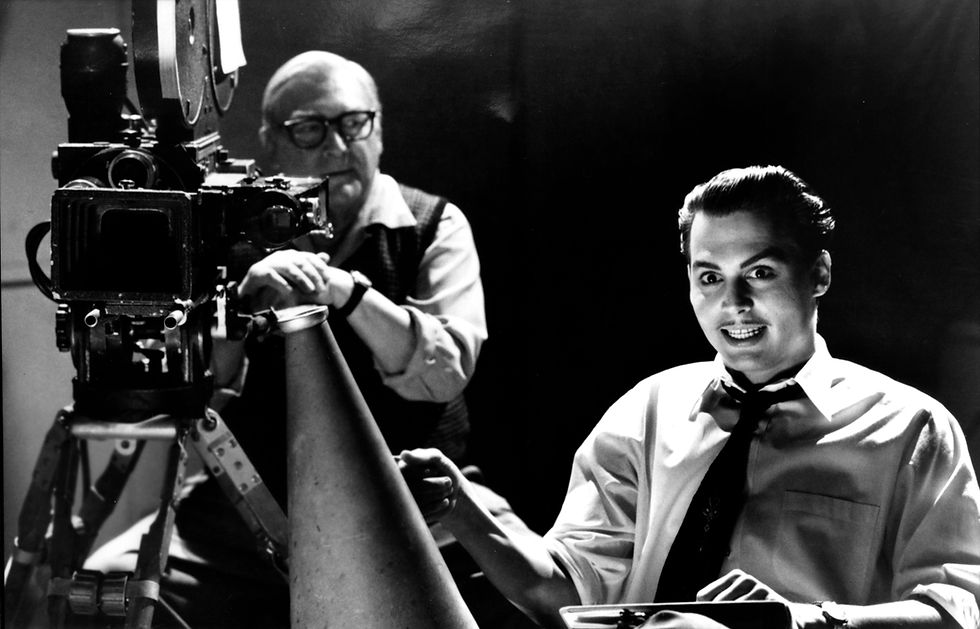
Ed Wood (1994) – A touching biopic and ode to misfit filmmakers, widely regarded as one of Burton’s finest achievements.
Big Fish (2003) – A heartfelt, magical realist story about storytelling and father-son relationships, demonstrating Burton’s emotional range.
Later Career and Mainstream Success
Burton has continued to find success in the 2000s and 2010s with films like Charlie and the Chocolate Factory (2005), Corpse Bride (2005), and Alice in Wonderland (2010), the latter becoming a box office juggernaut. Though some critics have noted a tendency toward over-reliance on visual effects and repetitive motifs in later work, Burton’s singular vision remains unmistakable.
In 2019, he directed a live-action remake of Dumbo for Disney, reuniting him with Batman stars Michael Keaton and Danny DeVito. More recently, Burton made his television debut as an executive producer and director of Wednesday (2022), a Netflix series based on The Addams Family character. The show was a major success, bringing Burton’s gothic flair to a new generation.
Legacy
Tim Burton's legacy lies in his unwavering commitment to his vision. He gave the film world a fresh vocabulary of imagery and emotion—where Halloween meets heartbreak, and the monstrous becomes meaningful. He brought alternative sensibilities to the mainstream without diluting their strangeness, and he empowered a generation of young, artistic outsiders to find their voices.
Whether you love his work for its emotional resonance, its visual daring, or its celebration of misfits and dreamers, there’s no denying Burton’s lasting impact on cinema.
Conclusion
Tim Burton is not just a filmmaker—he’s a world-builder, a dreamer, and an artist who sees beauty where others see only darkness. Through his lovingly crafted tales of outcasts and oddballs, he’s invited audiences to embrace the peculiar and to find strength in strangeness. In doing so, he’s redefined what it means to be a visionary in Hollywood—and proved that sometimes, it’s the weirdest stories that speak to us most deeply.